Running a dental practice is rewarding, but rarely is it simple. On any given day, you’re managing patients, schedules, charts, insurance claims, billing, and a team that depends on everything working together. When the schedule is full and the front desk is busy, you need a system that keeps you in control instead of slowing you down.
That is where your practice management software comes in.
Your practice management system is more than a digital appointment book. It is the heartbeat of your office. From booking patient appointments and charting treatments to filing claims and tracking production, this software shapes how smoothly your practice runs every single day.
So how do you choose the right one?
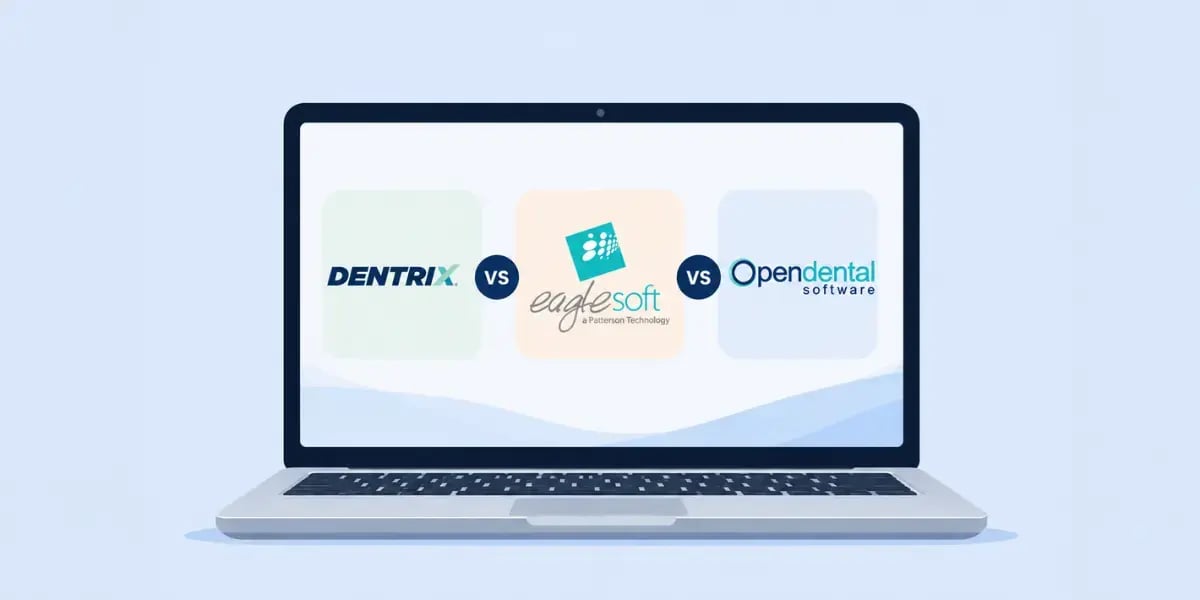
Below, we break down three of the most popular practice management systems dentists use: Dentrix, Eaglesoft, and Open Dental. These platforms are trusted by thousands of practices across the country, and each has its own strengths and weaknesses.
Let’s take a closer look.
Why Your Practice Management System Matters More Than Ever
If your current system is clunky or unreliable, it is costing you more than time. It’s likely costing you money, too.
Here are some common signs that your software may be holding you back:
- Long check-in lines and frustrated patients in the waiting room
- Denied or delayed insurance claims
- Billing errors and balances that slip through the cracks
- Disconnected tools for texting, payments, reminders, and imaging
When things don’t work right, it adds stress for your team and creates a poor experience for your patients.
Modern practice management systems can fix that. They streamline everything from scheduling and charting to claims and reporting. Some are now cloud-based, so you can check your numbers from anywhere. The best part is that the right system doesn’t have to be overly complex. Let us look at what each option brings to the table.
|
Software |
Best For |
Biggest Strength |
Biggest Drawback |
|
Dentrix |
Established practices wanting the largest ecosystem |
Broad integrations and a deep feature set |
Core system is server-based (cloud Ascend sold separately) |
|
Eaglesoft |
Practices in the Patterson ecosystem |
Approachable interface and strong charting |
Slower updates and Patterson lock-in |
|
Open Dental |
Practices wanting flexibility and value |
Customizable with a large integration marketplace |
Best for those comfortable managing a server |
Dentrix: The Established Market Leader
If you want the most widely recognized name in dental software, Dentrix is the heavyweight. Made by Henry Schein, it serves over 35,000 practices, according to its website, and holds the largest market share. Many established offices have run on it for years and know it inside and out.
What Dentrix Does Well
Dentrix shines when it comes to depth and connections. It offers:
- A dense feature set for scheduling, charting, billing, and treatment planning
- Broad imaging support, with tested bridges to platforms like DEXIS, Sidexis, and more
- A modular setup, so you can add functionality as your practice grows
- Built-in analytics
- One of the largest user communities in the industry
Because so many vendors build to work with Dentrix, you have plenty of options when connecting imaging, payments, and patient communication tools.
Why People Like Dentrix
Dentrix is known for its longevity and familiarity. Established practices often feel comfortable with it because they have used it for years and trained their teams on it. It’s rich enough that most offices will not outgrow its features, and its long track record gives owners confidence that it isn’t going away.
Dentrix Downsides
Dentrix is traditionally a server-based, on-premise system, which means you maintain the hardware that runs it. Once you add software licensing, annual support, and the modules you need, the total cost can climb. It also has a learning curve, and because so much is tied together, moving away from it later takes real effort.
A cloud-based option, too. If the server-based setup gives you pause, Dentrix now offers a cloud-native sibling called Dentrix Ascend. It brings scheduling, billing, imaging, patient communication, and analytics into one platform you can reach from any device, with built-in AI charting tools and enterprise-grade security. It is built to scale across multiple locations, which makes it worth a look for practices that want the Dentrix name without maintaining their own server.
Final Verdict: Dentrix is best for established or growing practices that want the deepest ecosystem and broadest integrations, and that don’t mind paying for that depth.

Eaglesoft: The Chair-Side-Friendly Contender
Made by Patterson Dental, Eaglesoft has long been Dentrix's closest rival. Like Dentrix, it is a Windows-based, on-premise system backed by a SQL Server database, and it covers scheduling, clinical charting, billing, and imaging.
What Eaglesoft Does Well
Eaglesoft is built to feel approachable at the chair and the front desk. It offers:
- A clean interface that many teams find easier to learn
- A strong clinical charting workflow for practices focused on the chair-side experience
- Solid imaging integration, especially within the Patterson product family
- A bundled tie-in with Weave for patient communication and payments
Why People Like Eaglesoft
Eaglesoft tends to have a shallower learning curve, so new staff can get comfortable faster. Patterson also has a good reputation for responsive customer service, which matters when something goes wrong during a busy day. For practices already buying supplies and imaging through Patterson, it slides neatly into how they already work.
Eaglesoft Downsides
Eaglesoft is closely tied to the Patterson ecosystem. That is convenient if you stay within it, but switching imaging hardware or suppliers away from Patterson can create support friction. Its update pace has also been slower than some competitors in recent years, so a few newer features arrive later than they do elsewhere. Like Dentrix, it is server-based, so you are responsible for the underlying hardware.
Final Verdict: Eaglesoft is a strong fit for practices that are already in the Patterson world, or plan to be, and that value an easy chair-side experience.
Open Dental: The Flexible, Open Option
If you want flexibility and value, Open Dental is hard to beat. It is one of the most widely adopted open-source dental platforms, and it is frequently named a top overall choice in industry reviews. Instead of locking you into fixed workflows, it gives your team the freedom to tailor how you work.
What Open Dental Does Well
Open Dental is built around customization and openness. It offers:
- Deep customization, so you can shape the software around your processes
- Strong data access and ownership
- A fast-growing certified integration marketplace
- Compatibility with most major dental imaging software
- A setup that works for both solo practices and multi-location practices
Why People Like Open Dental
Practices appreciate the flexibility and the predictable, often lower, cost. The open approach means you are not boxed into one company's way of doing things, and an active user community shares tips and support. For owners who like to have control over their tools and data, it is a natural fit.
Open Dental Downsides
Open Dental has traditionally been server-based, and it rewards practices that are comfortable being a bit more hands-on. Setting it up and customizing it takes some effort, and you may lean on your own tech know-how or outside help more than you would with a fully managed system. A cloud option exists, but many offices still run it on a local server.
Final Verdict: Open Dental is best for practices that want control, customization, and value, and that are comfortable being a little more self-sufficient.
Honorable Mentions: Two Cloud-Based Options Worth Watching
If you are drawn to a fully cloud-based, all-in-one approach, two newer platforms deserve a look. Both were built for the cloud from the start, which means automatic updates, access from any device, and fewer separate tools to juggle.
Curve Dental
Curve Dental was built in the cloud from the beginning rather than being adapted to it later. It integrates texting, payments, reminders, and imaging into a single system, with automatic updates and predictable monthly pricing. It is popular with solo and mid-size practices that want to simplify their tools without managing a server.
CareStack
CareStack is an all-in-one cloud platform aimed at groups, dental service organizations, and multi-location practices. It combines scheduling, charting, claims, billing, patient engagement, and analytics in one place, with the goal of replacing several third-party tools. Practices often praise its support and reporting, though new users note there is some setup involved up front.
Which Dental Software Is Right for You?
Still not sure which one to choose? Ask yourself a few questions:
- Do I want the deepest ecosystem and the broadest integrations? Then Dentrix may be your best bet.
- Am I already in the Patterson world and focused on easy charting? Then Eaglesoft could be the right balance.
- Do I want flexibility, customization, and value? Then Open Dental is worth a close look.
- Am I prioritizing cloud access and all-in-one simplicity? Then Curve or CareStack may fit best.
Think about how you schedule, chart, bill, and report. Consider whether you prefer a cloud system or a server in your office, and how much you expect to grow. The right software should support the way you work, not make things harder or slow you down.
Whatever you choose, pick a system that fits your practice today and can grow with you tomorrow.
Don’t Let Your Software Hold Your Practice Back
Choosing a practice management system is a big decision, but it doesn’t have to be overwhelming.
Start with your daily frustrations. What slows your front desk down? Where do claims or balances fall through the cracks? Then look for a system that solves those problems without creating new ones. A good system helps your team move faster, gives you clearer insight into your numbers, and frees you up to focus on patient care.
Of course, even the best software only tells part of the story. Once your practice data is flowing cleanly, you still want your bookkeeping, payroll, and taxes handled accurately and on time so there are no surprises. That’s where the right support team makes a difference.
At TMA Accounting, we help dental practices and other professional service businesses keep their books, payroll, and taxes organized and on track, all under one roof.
Curious what it would look like to have one team handle your bookkeeping, payroll, and taxes? Schedule a quick intro call, and we’ll walk you through it.

Blog Disclaimer: Nothing in this post constitutes legal, tax, or financial advice and is intended for informational and educational purposes only. This informational and educational material is not intended, and must not be taken, as legal, tax, or financial advice on any particular set of facts or circumstances or as recommendations that are suitable for any specific person. You need to contact a lawyer, accountant, or financial adviser licensed in your jurisdiction for advice on your specific questions, issues, and concerns. View our full Terms of Use here.
Topics: