Weeks of digging through old files. Logins nobody has used in months or years. A new service provider learning the business while payroll still has to run on Friday. That is the reputation switching accountants has, and it’s why the idea gets raised, set aside, and raised again the next time a filing deadline sneaks up or a simple question takes two weeks to get answered.
Some of that is fair. A switch with no one running it really can drag for months. A switch with a process behind it looks much different. It runs in weeks, not months, and most of the work never reaches your desk.
Here’s exactly how the process works at TMA, what it asks of you, and how long it takes.
Why Business Owners Put Off Switching (and Why They Shouldn't)
Business owners rarely wait because they’re satisfied. They wait because a few specific worries get in the way, and they're all reasonable.
Fear of Disruption
Payroll has to run, and filings have deadlines, so handing it all to someone new feels risky. In practice, the payroll conversion gets planned around your pay cycle rather than dropped into the middle of it.
Bookkeeping that has Fallen Behind
Records that are behind are one of the most common reasons owners call in the first place, not a reason to hold off. Catch-up work is normal, and there’s a process for it. It gets scoped and quoted separately from the ongoing monthly fee, so you know what catching up will cost before anyone starts.
Loyalty
Plenty of accountants helped their clients get started years ago, and moving on can feel like a slight. But the fit that worked when your business had only three employees is often not the fit when it grows to fifteen. Outgrowing an arrangement is not the same as being unhappy with a person.
Not Having Time Right Now
A busier week is always coming. Waiting isn’t free either, though the cost shows up in pieces: an hour spent chasing down a number, a question that sits for two weeks, a filing handled at the last minute.
If you're still deciding whether to make a change at all, start with How to Switch Accountants. It covers the signs it's time and how to time it. From here, this article assumes that part is settled.
Here’s the biggest takeaway: the problem is usually not a person. It’s the lack of a process. When accounting, payroll, and taxes live in different places, nothing connects, nobody owns the whole picture, and the same questions get asked twice. Work gets done, but in pieces. There’s no system holding it all together, so gaps only surface when something goes wrong or a deadline arrives. That’s what makes a year feel reactive, and it quietly costs a little more attention every month it goes unaddressed.

What Makes Switching to TMA Straightforward
Ask any accountant or accounting firm you're considering to describe what their new client onboarding process actually looks like. One that onboards new clients every month can tell you what happens and in what order. One that hasn’t done it much will tell you, “It depends”. Here's what TMA’s process looks like.
There’s a Defined Path, Not a Scramble
TMA supports 300+ small businesses every month, and the transition to our services follows a process we've run hundreds of times. Nobody is inventing the steps as they go. There’s a set order to the document request, software setup, payroll conversion, and catch-up work (if needed).
One Connected Team
Accounting, payroll, and taxes are connected under one team and move together. You aren’t coordinating a handoff between three separate service providers during the switch, and you’re not the one making sure the payroll and tax teams are talking to each other. When payroll converts, the accounting side already knows what changed. When a question comes up about a prior-year return, the person who can answer it is down the hall. That coordination happens internally, which is exactly where it should happen.
Real People
You meet the actual team guiding the transition, not a rotating support inbox or hotline. The people you talk to during onboarding are the people you work with afterward, which matters more than it sounds. They learn how your business runs during the switch, and that context doesn’t get lost in a handoff later.
Fixed-Fee Predictability
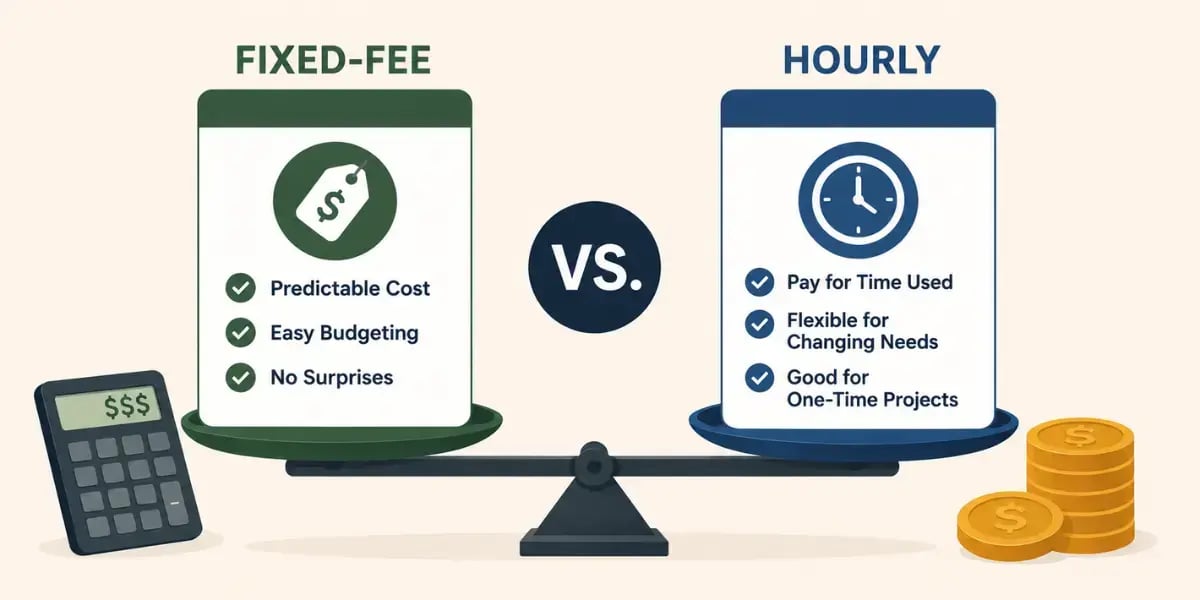
Pricing is agreed on before any work begins, including catch-up work. If bookkeeping needs to be brought current, the cost is part of the conversation up front, not a discovery three weeks in. There's no meter running during the switch and no surprise invoice halfway through. Most business owners aren't worried a new firm can't do the work. They're worried about what it'll cost once it's underway. That's the question fixed pricing answers before you commit.
One more thing shapes the experience: back work and current work happen in parallel. When possible, TMA doesn’t stop and wait for cleanup to be finished before starting on the present month. Current accounting begins right away while catch-up runs alongside it. That means you’re operating on a current basis quickly instead of waiting on history to be reconciled first.
How Much Time Will This Take from You?
Switching does ask something of you. It’s light and front-loaded.
Your part typically looks like this:
- Gather a few documents and grant us some access to data. Recent financial statements, the last couple of years of business tax returns, bank and credit card statements, payroll access, and your accounting software login. Most of this already exists somewhere. The tax returns establish the starting point, the statements let reconciliations begin, and the access lets the team work without routing every small request back through you.
- An onboarding and strategy meeting. This is where you meet the team, walk through the path forward, and set the timeline. It’s also where you say what hasn’t been working, which shapes the ongoing rhythm.
- Occasional questions. During catch-up and clean-up, someone may need context on a transaction or a vendor. These are usually quick, and they thin out as the team learns your business.
Everything else sits on TMA's side. You’re not the one chasing details between providers or relaying a message from one person to another.
The one variable that speeds everything up is your level of engagement and collaboration. TMA does its best work when it hears from you regularly, and when you stay engaged during those first few weeks, everything runs smoothly and finishes faster. Answering a question the same day keeps the work moving. The same question sitting for two weeks stalls a piece of it.
What the Timeline Looks Like
The goal is a full transition within about 60 days. It often moves faster, especially for a newer business, when there isn’t much cleanup to do, and you respond in a timely manner.
On the front end, things move quickly. A proposal usually comes within a day or two, assuming the business is a fit. Once the service agreement is signed, a first implementation meeting follows within a week or two. Current accounting gets underway while any back work runs alongside it. From there, the pace depends mostly on how much history needs attention. Discussing your situation with your new accountant, getting your questions answered, converting payroll, and catching up on bookkeeping can often be accomplished within just a few weeks.
An honest caveat: if there’s a lot of cleanup or back work, the full transition can take longer. That’s normal, and it isn’t a sign that something went wrong. Bookkeeping that fell behind took time to fall behind, and bringing it current takes some time, too.
Those first 60 days line up with the first stage of TMA's process: getting organized. Accounting and payroll systems get set up and start operating, with payroll running through TMA's cloud-based platform. Bookkeeping is brought current. You have a team on your side, learning your business.
Switching Is Lighter Than It Sounds
Switching accountants sounds bigger than it is. The reputation involves months of disruption and a project nobody has time for. What it actually involves is a document pull, a handful of questions, and a team that carries the rest.
If you want to see what it would cost before you talk to anyone, start with the Price Estimator. It takes a few minutes, and there’s no commitment.

Blog Disclaimer: Nothing in this post constitutes legal, tax, or financial advice and is intended for informational and educational purposes only. This informational and educational material is not intended, and must not be taken, as legal, tax, or financial advice on any particular set of facts or circumstances or as recommendations that are suitable for any specific person. You need to contact a lawyer, accountant, or financial adviser licensed in your jurisdiction for advice on your specific questions, issues, and concerns. View our full Terms of Use here.