“As long as I’m not in trouble with the IRS, my books must be fine." We hear this all the time from small business owners. And on the surface, it makes sense. If no letters are showing up in the mail and your tax return gets filed on time, bookkeeping feels like it must be “good enough.”
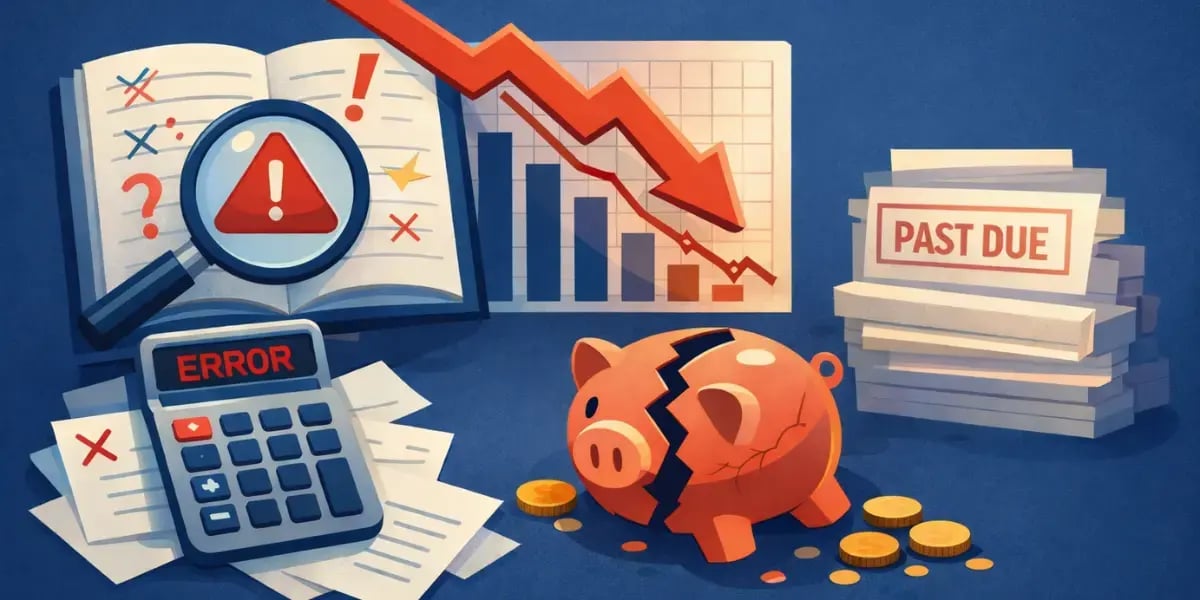
The problem is this: bad bookkeeping rarely feels urgent. It does not usually cause alarms or obvious breakdowns. Instead, it quietly drains cash, creates stress, and leads to costly decisions made with incomplete information.
By the time the damage is obvious, it is often expensive to fix.
Below, we will walk through four common warning signs that your bookkeeping may be hurting your business, even if everything looks fine at first glance. If you recognize yourself in any of these, you are not alone. More importantly, you are not stuck.

Sign #1: You Don’t Trust Your Financial Reports
Bookkeeping should give you clarity. When it doesn’t, it becomes a liability. When the numbers feel unreliable, most business owners stop using them altogether. Instead of guiding decisions, the reports get ignored, and gut instinct takes over.
Your Profit & Loss Statement Doesn’t Match Reality
Your Profit & Loss statement says you are profitable, but your bank account tells a different story. You feel busy. Sales are coming in. Yet hiring feels risky, and spending money feels uncomfortable.
That disconnect is not normal.
When revenue and expenses are miscategorized, recorded late, or entered inconsistently, your reports stop reflecting how the business actually feels. Instead of helping you understand what is going on, they create confusion.
If you regularly say things like:
- “That number doesn’t seem right.”
- “It feels like we should be doing better than this.”
- “I don’t really trust these reports.”
Your bookkeeping is likely part of the problem.
Your Reports Change Every Month, and No One Can Explain Why
Some fluctuation is normal. Wild swings without explanation are not.
If your numbers change from month to month and no one can clearly explain why, that usually points to:
- Inconsistent categorization of expenses
- Accounts that are not reconciled regularly
- Adjustments being made long after the fact
Reliable bookkeeping follows clear, repeatable processes. When the process breaks down, the reports become unstable.
When You Can’t Trust the Numbers, You Can’t Trust Your Decisions
When your reports feel unreliable, every decision feels heavier than it should. You hesitate to hire, give raises, invest in equipment or new technology, and adjust your pricing.
That hesitation slows momentum. Over time, it costs more than a single bad decision ever would. Good bookkeeping does not eliminate risk, but it replaces guessing with informed judgment.
Sign #2: Cash Problems Keep Catching You Off Guard
This is one of the most common and stressful issues we see.
On paper, the business looks fine. Sales are coming in. The Profit & Loss statement shows a profit. But when it is time to pay bills, run payroll, or cover taxes, cash feels tight.
That disconnect is a sign that bookkeeping is not helping you see what is coming next.
You’re Profitable on Paper but Constantly Worried About Cash
Profit does not equal cash in the bank.
Timing matters. When income is recorded but not collected, or when expenses are misclassified or delayed, your reports can show a profit that does not exist in real life.
Without clean, timely books, it becomes almost impossible to answer simple questions like:
- How much cash do we actually have available?
- What bills are coming due soon?
- Can we afford this decision next month?
When bookkeeping fails here, anxiety fills the gap.
Big Expenses Catch You Off Guard
Tax payments, insurance premiums, equipment repairs, and annual fees should not feel like surprises. Yet many business owners can feel blindsided by these costs every year.
The reason is not the expense itself. It is the lack of visibility.
When your books only show what already happened, instead of what is coming, one large payment can throw off an entire month and create unnecessary stress.
You Have No Clear View of What’s Coming Next
If decisions are based only on today’s bank balance, you are always reacting.
You end up delaying decisions that could help the business, rushing decisions when cash gets tight, and feeling like you are constantly behind.
Bookkeeping should help you look ahead, not just look back.
Sign #3: You’re Always Playing Catch-Up
When bookkeeping falls behind, everything else follows. Outdated books turn routine tasks into fire drills and simple questions into guessing games. Over time, that constant catch-up mode drains focus, time, and energy from the business.
Your Books Are Months Behind (or Only Updated at Income Tax Time)
For many owners, bookkeeping gets pushed to the back burner. Day-to-day operations feel more urgent. Then weeks turn into months.
By the time the books are updated, the information is already outdated. Reports arrive too late to be useful. Running a business this way is like driving while only looking in the rearview mirror. You can do it for a while, but eventually, something goes wrong.
Income Tax Time Is Stressful, Rushed, and Chaotic
When bookkeeping is behind, filing income taxes becomes painful.
You may find yourself:
- Scrambling to find documents
- Answering last-minute questions
- Paying for corrections and cleanup
- Worrying about mistakes you cannot see
This stress is not inevitable. It is often the result of books that were never truly up to date.
Cleaning Up Messy Books Costs More Than Doing Them Right
Catching up months or years of bookkeeping almost always costs more than maintaining it properly. The longer issues go unaddressed, the more time it takes to sort through transactions, correct mistakes, and piece together what actually happened.
Errors become easier to miss, deductions become harder to identify, and the risk of problems grows. Consistent bookkeeping is not just easier to manage. In the long run, it is far more affordable and far less stressful.
Sign #4: Income Tax Time Comes With Unpleasant Surprises
If you brace yourself every year for bad news, your bookkeeping is not doing its job. It should help you see what is coming, not leave you surprised when it is time to file.
You Owe More Than Expected Every Single Year
Surprise tax bills often feel unavoidable, but they are usually a symptom of disconnected systems.
When monthly bookkeeping is not tied closely to income tax preparation, business owners lose the ability to prepare gradually. Instead of knowing what is coming, they react at the last minute. That reaction often involves stress, frustration, and limited options.
There’s No Proactive Review During the Year
Many owners treat taxes as a once-a-year event. That approach makes surprises more likely.
When bookkeeping is up-to-date, it supports a clearer picture. You can see how the year is shaping up and make informed choices before it is too late.
This does not require complex strategies. It requires clean data and regular review.
By the Time Problems Are Found, It’s Too Late to Fix Them
When issues only surface after the year is over, opportunities are already gone.
At that point, expenses are locked in, income is already earned, and (most) decisions cannot be undone. Bookkeeping should help you make better choices during the year, not just explain what happened after.
How to Fix Broken Bookkeeping (Without Making Things More Complicated)
Many business owners worry that fixing bookkeeping means more time, more systems, and more headaches. In reality, good bookkeeping simplifies things.
What Small Business Owners Should Expect From Bookkeeping
At a minimum, bookkeeping should provide:
- Accurate and timely financial reports
- Clear explanations you can understand
- Consistent processes you can rely on
- Numbers that match how the business actually feels
If your current setup does not deliver these basics, it is not serving you well. Better data leads to better decisions. Better decisions lead to a healthier business.
Bad Bookkeeping Is Quiet Until It Gets Expensive
Bookkeeping problems rarely announce themselves. They build slowly. They hide in small inconsistencies, outdated reports, and unanswered questions. Then they show up at the worst possible time.
The good news is this: the earlier bookkeeping issues are addressed, the easier they are to fix. Clarity compounds just like confusion does.
If one or more of these signs feel familiar, it may be time for a conversation. TMA Accounting helps small business owners replace uncertainty with clear, reliable financial information. Our goal is not just compliance. It is confidence, clarity, and peace of mind for you.
If you’re tired of guessing and ready for bookkeeping that actually supports your business, we are here to help.
Schedule a call with us and take the first step toward simpler, more reliable financials.

Blog Disclaimer: Nothing in this post constitutes legal, tax, or financial advice and is intended for informational and educational purposes only. This informational and educational material is not intended, and must not be taken, as legal, tax, or financial advice on any particular set of facts or circumstances or as recommendations that are suitable for any specific person. You need to contact a lawyer, accountant, or financial adviser licensed in your jurisdiction for advice on your specific questions, issues, and concerns. View our full Terms of Use here.
Topics: